
When should you mow your Florida panhandle lawn?
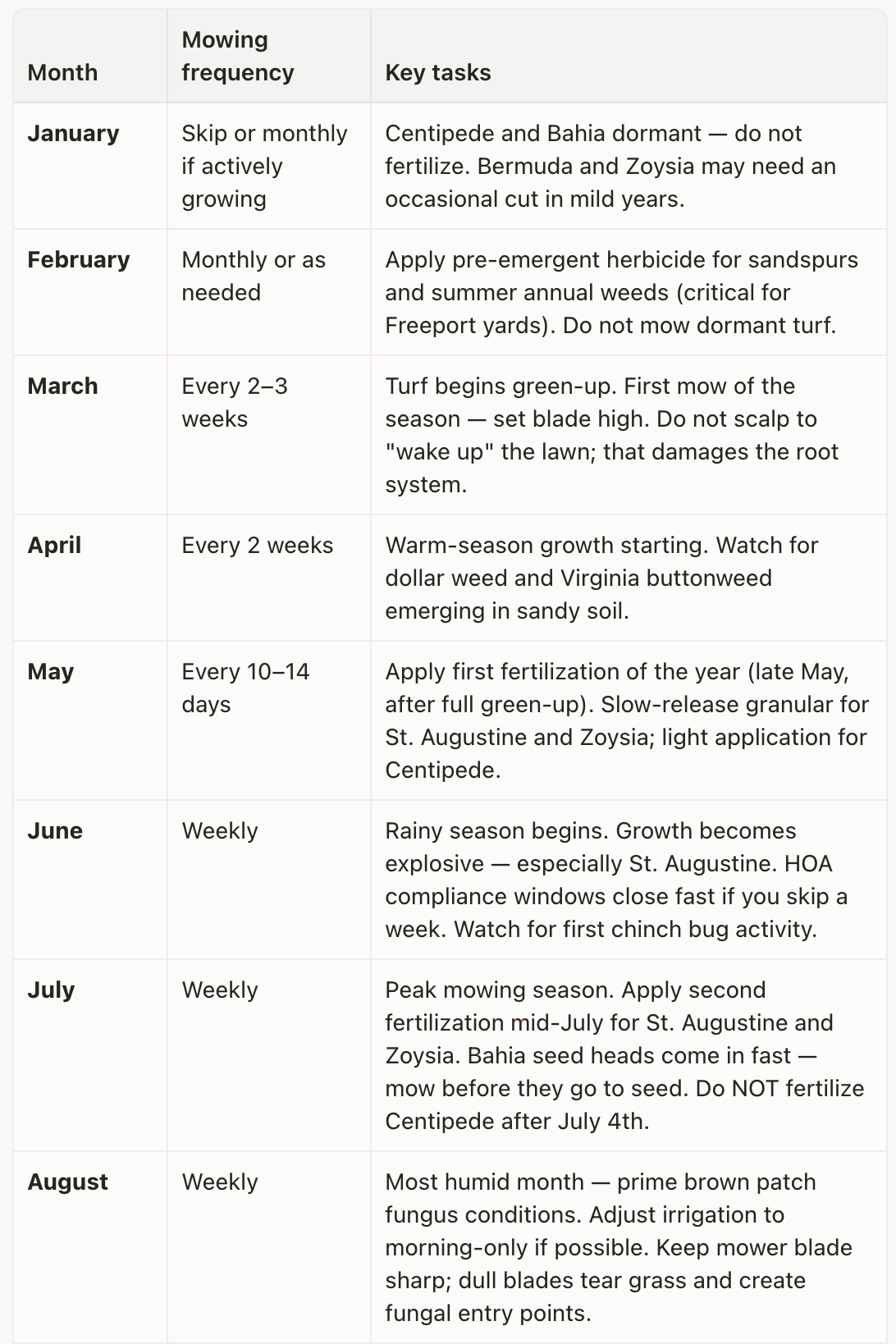
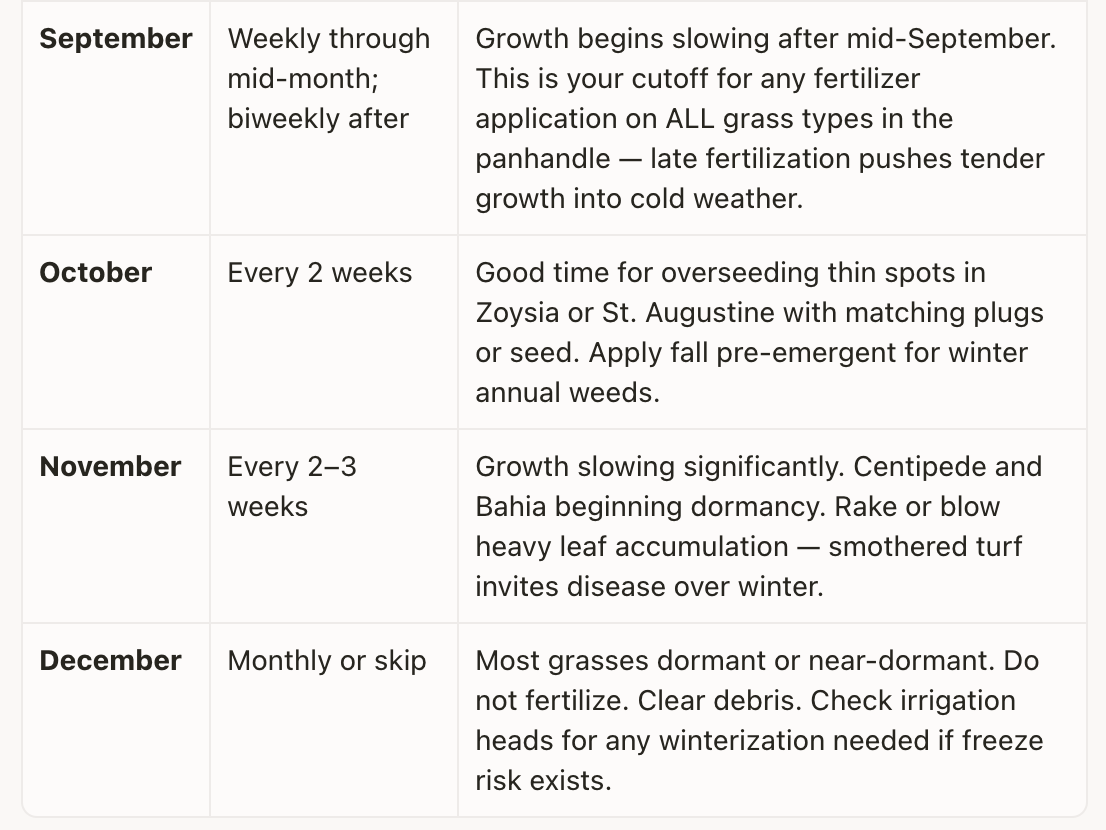
When should you mow your Florida panhandle lawn? TL;DR: Mow weekly from June through September. Drop to biweekly in spring and fall. Monthly — or skip entirely — in the heart of winter. Fertilize twice: late spring and midsummer. Never fertilize after September 15 in the panhandle.
That's the short answer. The longer one depends on your grass type, your lot location, and whether you're dealing with specific issues like sandspurs, brown patch, or chinch bugs. Here's a month-by-month breakdown for every major turf type in our area.
Why the Florida Panhandle Has Its Own Mowing Rules The panhandle is not south Florida. We have an actual winter — brief frosts, occasional hard freezes, and Centipede and Bahia grass that goes fully dormant from December through February. We also have a rainy season (June–September) that produces afternoon thunderstorms nearly every day and can push St. Augustine growth by an inch or more per week.
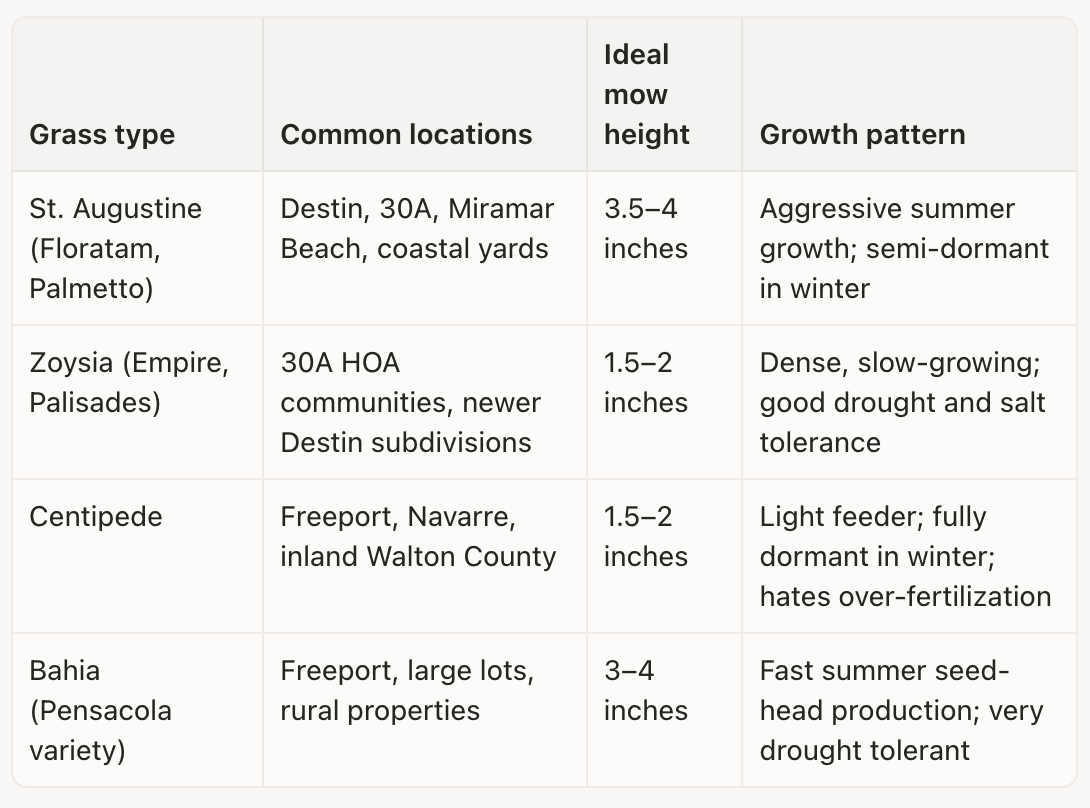
The other factor: we have four distinct grasses common here, each with different mowing heights, fertilization needs, and seasonal behaviors.
Month-by-Month Mowing & Care Calendar
Grass-Specific Notes You Need to Know
St. Augustine (Floratam, Palmetto) — Destin, 30A, Miramar Beach
The most common grass in the coastal panhandle and the most demanding. It needs a sharp blade, the right height (never below 3 inches), and a consistent weekly schedule in summer. The most common mistake: cutting it too short in the heat, which stresses the turf and invites chinch bugs. Floratam is more sun-tolerant; Palmetto handles light shade better. Both are reasonably salt-tolerant — important within a mile of the Gulf.
When to fertilize St. Augustine: Late May (after full green-up) and mid-July. Use a slow-release 15-0-15 or similar blend. Do not push nitrogen in late summer.
Zoysia — 30A HOA communities, newer subdivisions
Dense, slow-growing, and beautiful when maintained. Zoysia is less hungry than St. Augustine — one fertilization in late spring and a lighter application in midsummer is usually enough. It's highly drought-tolerant once established and handles the light salt exposure on 30A well. The trade-off: it takes longer to fill bare spots, and it goes tan in winter, which some HOAs flag.
When to fertilize Zoysia: Once in late May; a lighter follow-up in mid-July if needed.
Centipede — Freeport, Navarre, inland lawns
Centipede is a low-maintenance grass that's aggressively punished by over-care. Too much nitrogen makes it push top growth at the expense of roots, which leads to thatch, disease, and winter-kill. One conservative fertilization in late spring (low nitrogen, high potassium) is the standard recommendation. Never fertilize after July 4th in the panhandle.
Dormancy note: Centipede goes fully straw-brown in winter. This is normal — do not treat it as dead. It will green back up in mid-March.
When to fertilize Centipede: Once only, in late May. Use a low-nitrogen, high-iron formula.
Bahia — Freeport, large lots, rural properties
Bahia is the toughest grass in the panhandle — drought-tolerant, low-input, and forgiving. The challenge: it produces tall, coarse seed heads from June through September that need mowing before they set seed, or the lawn looks unkempt within days of a cut. Weekly mowing in summer is necessary not just for height but to prevent seeding. Mole crickets are the main Bahia pest — treat with insecticide in late spring when nymphs are small.
When to fertilize Bahia: Once in late spring (April–May) with a balanced granular fertilizer.
When to Dethatch Your Florida Panhandle Lawn
Dethatching is most beneficial for St. Augustine and Zoysia, which build thatch layers faster than Bahia or Centipede. In the panhandle, late spring (late April to mid-May) is the right window — the grass is actively growing and can recover quickly from the stress of dethatching. Never dethatch in summer heat or during drought, and never in fall heading into dormancy.
Hurricane Season Lawn Prep (June–November)
Hurricane and tropical storm season overlaps exactly with peak mowing season. A few practical tips:
Before a storm: Mow low (but not scalped — drop one notch below your regular height) to reduce windage on turf. Clear all loose debris, tools, and potted plants from the yard.
After a storm: Remove downed fronds, branches, and sand deposits quickly. Debris left on turf for more than a few days smothers the grass and creates brown patches.
Standing water: Sandy panhandle soil typically drains fast, but low spots can hold water. Aerate compacted areas once the ground dries to help recovery.
Get Consistent Lawn Care Across the Panhandle
The Wizard handles lawn maintenance in Destin, the 30A corridor, Freeport, Niceville, and the surrounding area. Free quotes, consistent scheduling, and crews that know the difference between Floratam and Palmetto St. Augustine.
Call 850-333-7333 or request a free quote online.